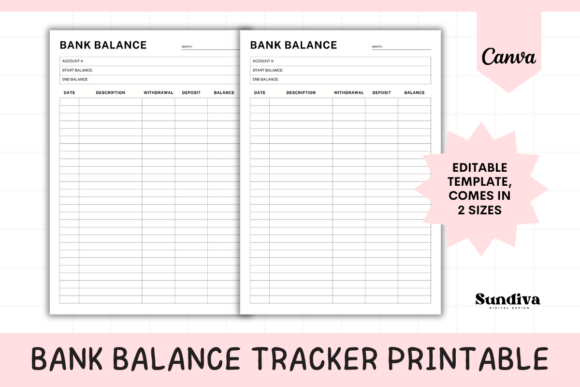
Editable Bank Balance Tracker Sheet 3: Master Your Finances
Let’s be honest, staring at a wall of numbers on a bank statement can be intimidating. Whether you are running a small e-commerce store, freelancing as a graphic designer, or simply trying to keep your household budget in check, financial organization is the backbone of peace of mind. We often talk about design assets for branding and marketing, but the most critical design asset for your business longevity is a system that helps you understand your cash flow. That is exactly where the Editable Bank Balance Tracker Sheet 3 comes into play. It bridges the gap between dry accounting and functional, visual organization.
This isn't just another spreadsheet template; it is a comprehensive tool designed to be fully customizable within Canva. If you have ever struggled with rigid Excel formulas or boring PDF printables that don't fit your specific needs, this solution changes the game. It is built for the modern creative professional who values aesthetics as much as accuracy. You can track your bank account balances, monitor incoming and outgoing transactions, and visualize your financial progress without needing an accounting degree. Because it is editable in Canva, you have the freedom to adjust colors, fonts, and layout elements to match your personal brand or business aesthetic.
Visual Style and Design Personality
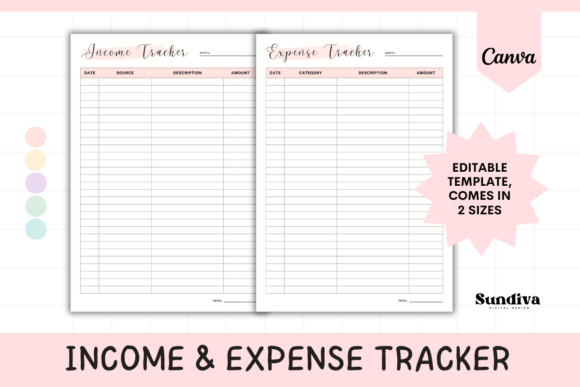
The strength of the Editable Bank Balance Tracker Sheet 3 lies in its clean, modern typography and user-centric layout. It avoids the chaotic "spreadsheet look" in favor of a structured, editorial design approach. The visual hierarchy is carefully crafted to guide your eye from the total balance down to individual transaction details. This isn't just about looking pretty; it is about usability. When you open the file, you will notice clear sections for dates, descriptions, and amounts. The use of white space is generous, preventing that feeling of being overwhelmed by data.
From a design perspective, the sheet uses a blend of sans serif font choices for readability and serif font accents for headers, creating a professional yet approachable vibe. This modern typography ensures that the document feels current and relevant. It works seamlessly as a digital file on your tablet or computer, but it is also optimized for print. The clarity of the text ensures that even small numbers remain legible when printed on standard paper, a crucial factor for physical record-keeping.
Real-World Applications for Entrepreneurs and Creatives
You might be wondering how a balance tracker fits into your creative workflow. For the small business owner, this tool is indispensable for monthly reconciliation. Instead of logging into your banking app repeatedly, you can maintain a running tally that gives you a snapshot of your financial health at any moment. For marketers and content creators, it serves as a project budget tracker, helping you manage ad spend versus revenue.
Here are a few practical scenarios where this template shines:
- Freelance Accounting: Track client payments against your business expenses to ensure you are always setting aside enough for taxes.
- Event Planning: Manage the budget for a specific project, like a workshop or a product launch, without mixing it up with your personal funds.
- Personal Savings Goals: Use the tracker to visualize your progress toward a down payment or a vacation fund. The visual nature of the template makes reaching those goals feel more tangible.
The versatility of the Editable Bank Balance Tracker Sheet 3 also extends to its format. Available in both US Letter and A4 sizes, it accommodates users globally. Whether you are printing it out to keep in a binder or using it as a digital overlay on your iPad, the dimensions are standard and accessible. This flexibility makes it a universal tool for financial management, regardless of your location or preferred workflow.
Customization: Making the Tool Your Own
One of the biggest hurdles with generic financial tools is that they feel impersonal. They are often designed by software engineers, not designers, resulting in a clunky user experience. This Canva-based template flips that script. Because you have full editability, you can treat this document as a piece of brand identity material. If your business brand uses a specific script font or a bold display font, you can easily swap out the headers to match your style guide.
Consider the psychological impact of using a tool that actually looks good. When you enjoy the interface you are working with, you are more likely to use it consistently. Consistency is the key to accurate financial tracking. You can change the background colors to categorize different months or use color coding to highlight high-priority expenses. This level of customization turns a mundane administrative task into a creative exercise.
Ensuring Accuracy and Consistency
While the design is a major selling point, the utility remains paramount. The layout of the Editable Bank Balance Tracker Sheet 3 is structured to minimize errors. By clearly defining columns for dates and descriptions, it encourages detailed record-keeping. This attention to detail is vital for brand perception in a B2B context; having your finances organized allows you to respond quickly to vendor inquiries or client billing questions with accurate data.
Moreover, using a consistent template helps in establishing a routine. Just as a designer might use a specific font pairing to maintain visual consistency across a website and print materials, using the same financial tracker helps maintain organizational consistency. It creates a "single source of truth" for your money. Over time, this allows you to spot trends—perhaps your software subscriptions are creeping up, or a specific client is consistently late on payments. These insights are only possible when your data is organized clearly.
Getting Started and Practical Tips
To get the most out of this purchase, you will need a free Canva account. While you can edit it on the mobile app, I highly recommend using a desktop or laptop computer for this task. Managing financial data on a small screen can be tedious, and the precision of a mouse and keyboard makes inputting numbers much faster.
Here is a quick workflow for integrating this sheet into your routine:
- Download and Duplicate: Once you access the PDF link, open the template in Canva. Immediately create a copy for each month or project so you always have a master template clean and ready.
- Personalize the Header: Add your business logo or your name to the top. This small touch reinforces ownership of the document.
- Set a Schedule: Don't wait until the end of the month. Dedicate 10 minutes every Friday to updating the tracker. This prevents a backlog of receipts and bank logs.
- Print for Review: Sometimes, seeing the numbers on paper helps you process them differently. Use the print-ready feature to review your monthly summary physically.
The Editable Bank Balance Tracker Sheet 3 is more than just a PDF file; it is a component of a healthy business ecosystem. It combines the aesthetic appeal of modern design with the pragmatic necessity of financial oversight. Whether you are a blogger tracking affiliate income or a hobbyist managing a side hustle budget, this tool provides the structure you need to stay financially organized. It is a simple, effective way to bring clarity to your numbers and confidence to your financial decisions.