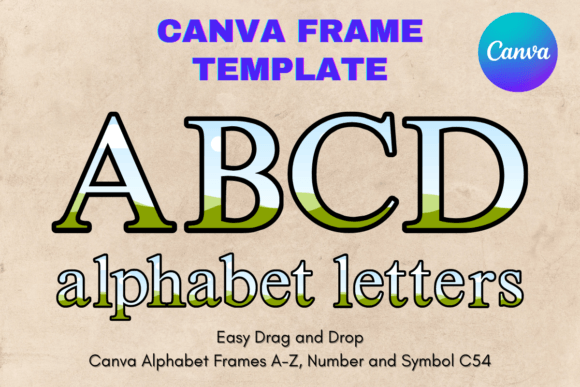
Canva Letters Frame Alphabet Template_54: A Guide to Custom Sublimation
In the world of custom product design and branding, consistency is everything. Whether you are a small business owner creating branded merchandise or a crafter personalizing gifts, the ability to produce uniform, high-quality typography is a significant challenge. This is where the Canva Letters Frame Alphabet Template_54 enters the conversation. It is not merely a font file to install; rather, it is a sophisticated digital asset designed to bridge the gap between professional design software and accessible crafting tools.
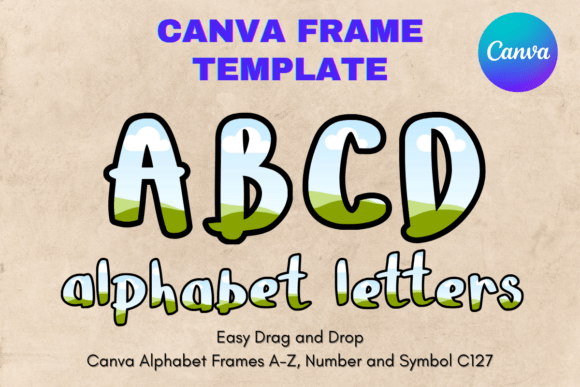
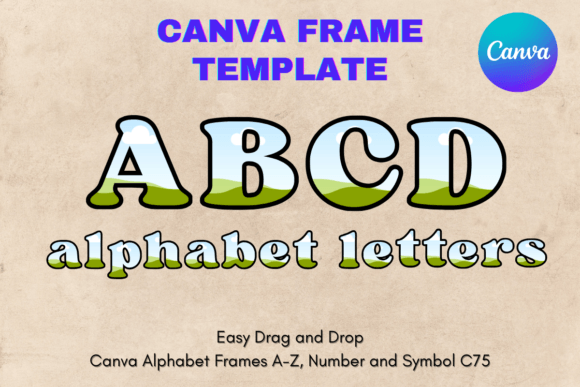
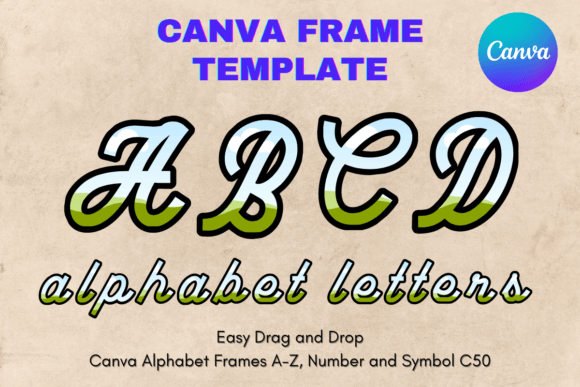
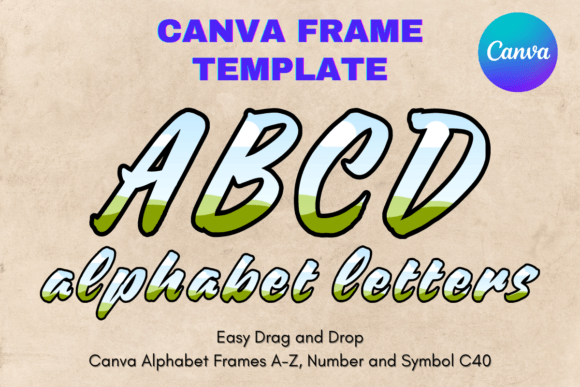
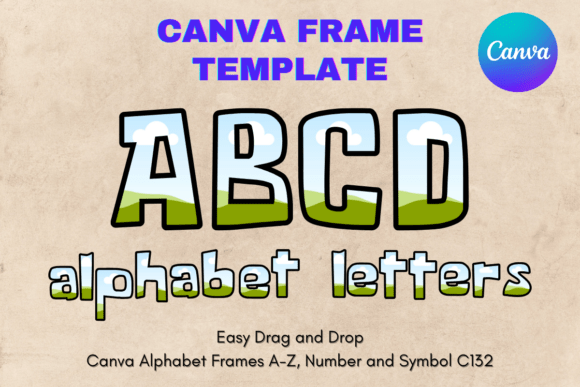
At its core, this template is a collection of vector-based letterforms designed specifically for use within Canva’s "Frames" feature. Visually, the template offers a distinct aesthetic that balances readability with character. Depending on the specific style embedded in Template_54, you might encounter a modern typography structure—perhaps a clean sans serif or a structured serif—that acts as a vessel for your creativity. The "frame" aspect is crucial here. Unlike a standard text tool where you simply type a word, these frames allow you to drag and drop high-resolution images, textures, or patterns inside the letters themselves. This transforms the typography from static text into a dynamic design element, ideal for sublimation printing where complex, colorful interiors are required.
The Power of the Frame: Visual Hierarchy and Brand Identity
Understanding how to utilize the Canva Letters Frame Alphabet Template_54 effectively requires a grasp of visual hierarchy. In design, hierarchy guides the viewer’s eye to the most important information first. Because this template allows for image-filled text, it inherently creates a high-contrast focal point. When you place a textured image—like wood grain, marble, or a vibrant gradient—inside a bold letterform, the eye is immediately drawn to it. This makes the template an exceptional tool for logo design and social media graphics where you need to stop the scroll and capture attention instantly.
For brands looking to establish a unique identity, this asset offers a level of customization that standard premium fonts often lack. A standard display font might dictate the weight and style of the letter, but it cannot dictate the surface texture of the letter without complex clipping masks in software like Adobe Illustrator. The Canva template simplifies this process. A coffee shop brand, for example, could use this template to spell out their name using images of coffee beans or roasted blends. A fitness brand could use images of iron weights or neon lights. This capability ensures that the typography is not just a label, but a direct representation of the brand’s core offering.
Practical Applications: From Digital Screens to Physical Products
The utility of the Canva Letters Frame Alphabet Template_54 spans a wide array of industries. For the content creator or blogger, this template is invaluable for creating standout YouTube thumbnails or Pinterest pins. Text-based graphics often suffer from looking generic when using standard system fonts. By using this frame template, creators can inject personality and texture into their titles, making their content appear more polished and professional. It serves as a bridge between amateur content creation and professional editorial design.
However, the true power of this digital file shines in the realm of crafting and sublimation. The product description explicitly highlights its utility for sublimation, a printing method that uses heat to transfer dye onto materials. Because the template provides a transparent layer and a structured frame, it allows for "knockout" designs where the background disappears, leaving only the textured letters. This is perfect for creating:
- Custom Apparel: Creating t-shirts and hoodies with intricate, photo-realistic typography that feels integrated into the fabric.
- Drinkware: Designing personalized mugs and tumblers where the text wraps around the curve without distortion, thanks to the scalable nature of the Canva frames.
- Home Decor: Producing custom wall art or pillows featuring names or inspirational quotes with complex visual textures.
- Packaging Design: Small business owners can mock up or print actual packaging labels that feature textured text, elevating the perceived value of the product.
Workflow and Usability: The Canva Advantage
One of the most significant barriers to entry for high-end design is the software learning curve. Professional tools like Photoshop or Illustrator are powerful but expensive and complex. The Canva Letters Frame Alphabet Template_54 democratizes this design capability. By operating within Canva, it utilizes a "drag and drop" interface that is intuitive for users of all skill levels. You do not need to understand layer masks or complex vector paths. The template handles the technical constraints, allowing the user to focus solely on the creative aspect—choosing the right image to fill the frame.
Furthermore, the flexibility of the template size is a major advantage. The description notes that sizes are approximate and can be adjusted. This scalability is essential for commercial font applications. A design that works for a small business card must also work for a large storefront banner. Because the underlying structure is vector-based (facilitated by the Canva frame), the design retains its crispness regardless of how much you scale it up or down. This ensures that whether you are printing a small logo on a pen or a massive graphic for a trade show booth, the quality remains uncompromised.
Evaluating Fit and Font Pairing Strategies
While the Canva Letters Frame Alphabet Template_54 is a robust design asset, knowing when to use it is just as important as knowing how. This type of creative font is best suited for headlines, logos, and short, impactful text. It is generally not recommended for long-form body text, such as blog posts or extensive product descriptions. The intricate details within the frames can become visually noisy at small sizes, potentially hindering readability.
When integrating this template into a broader design, font pairing is critical. Because the template letters are likely bold and visually dense, they pair best with clean, neutral typefaces. Consider using a simple sans serif font or a serif font for the supporting text. For example, if you use the template to create a large, textured headline for a poster, use a legible sans serif like Montserrat or Open Sans for the date, time, and location details. This contrast ensures that the design remains balanced and professional. The textured letters provide the "wow" factor, while the standard text provides the necessary information without competition.
Commercial Licensing and Project Planning
For entrepreneurs and small business owners, the commercial viability of a design asset is paramount. It is important to treat the Canva Letters Frame Alphabet Template_54 as a design asset that facilitates your business. When using this for client work or merchandise, always ensure that the images you drag into the frames are also cleared for commercial use. The template provides the structure, but the texture inside the letters (e.g., a stock photo of a galaxy or a floral pattern) must be licensed appropriately for the final product you intend to sell.
In summary, this template offers a practical solution for anyone looking to create custom, textured typography without the steep learning curve of advanced graphic design software. It combines the accessibility of Canva with the professional demands of sublimation and branding. By leveraging the Canva Letters Frame Alphabet Template_54, creators can move beyond basic text and start building visual identities that are tactile, vibrant, and deeply personalized.